Watch the videos to learn more about each section and read stories from the heroes who share their first hand experiences. The guide to the world of atoms is played by Roman Evdokimov.
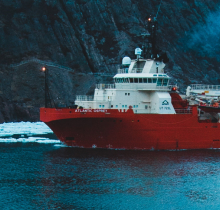
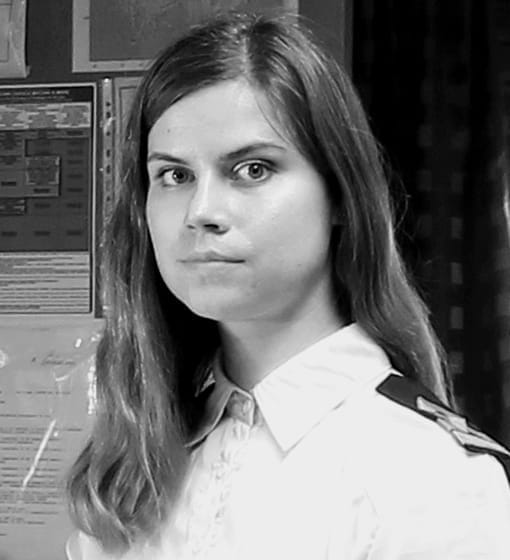

The hydrographic base, to which our ship belongs, joined Rosatom quite recently. First of all, we are united by the North — we work in the Arctic Ocean, in the Barents and Kara Seas, in the Ob Bay. Rosatom is in the process of developing the Northern Sea Route. Our «Aleksey Maryshev» is a special-purpose vessel: we mainly deal with depth measurements and installation of buoys for the passage of large ships, including nuclear-powered icebreakers.
When we leave from Arkhangelsk in the middle of summer, we can spend three months on the water, without mooring anywhere. Let’s take, for instance, an assignment to create a route to the port of Sabetta. We still work with paper maps, which are the most reliable. I pick them, read, draw a safe way. The captain, of course, verifies everything. My job in the open water is to observe. The horizon must be monitored to keep the boat on its course. It is necessary to consider the weather — the wind, waves, and storms. If the wave is massive, it is important to move along it. It would be best if you do not let the water hit the shipboard. As a third mate, I am on duty from 8 am till noon, and from 8 pm till midnight, the other shifts are covered by the first and the second mates. So goes the entire voyage. You work for four hours, rest for eight. By the way, I am the first female navigator at our base.
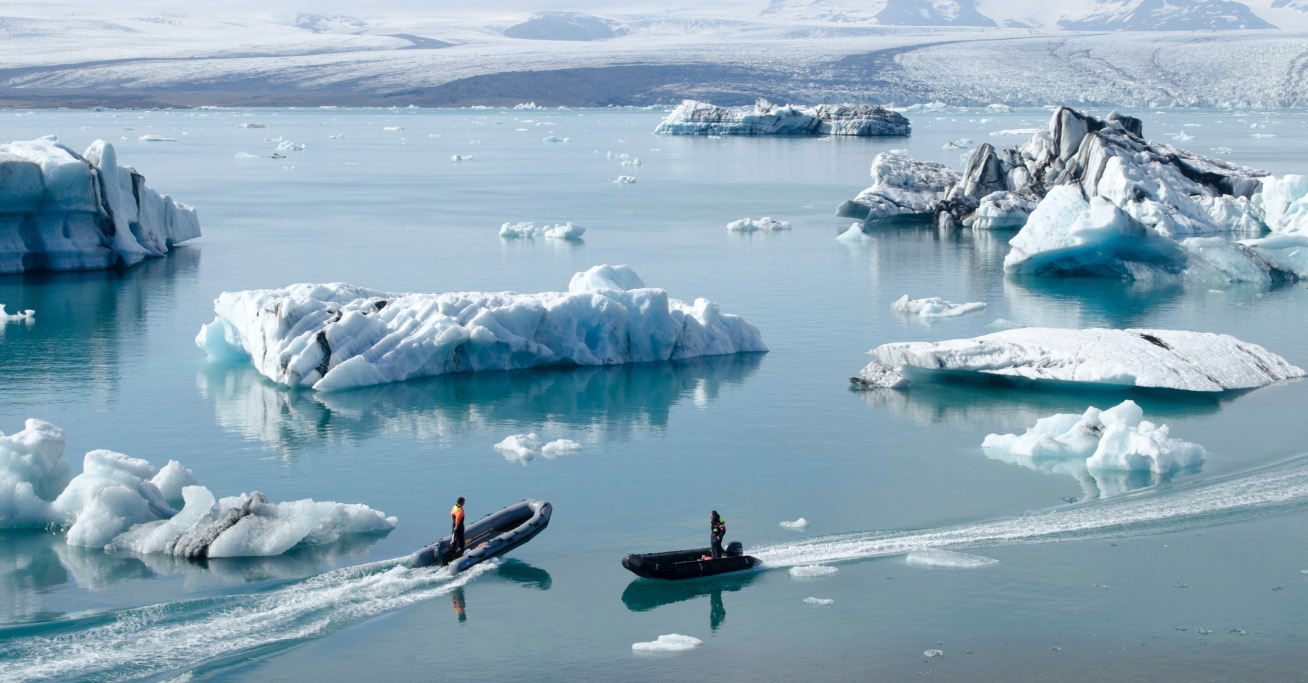
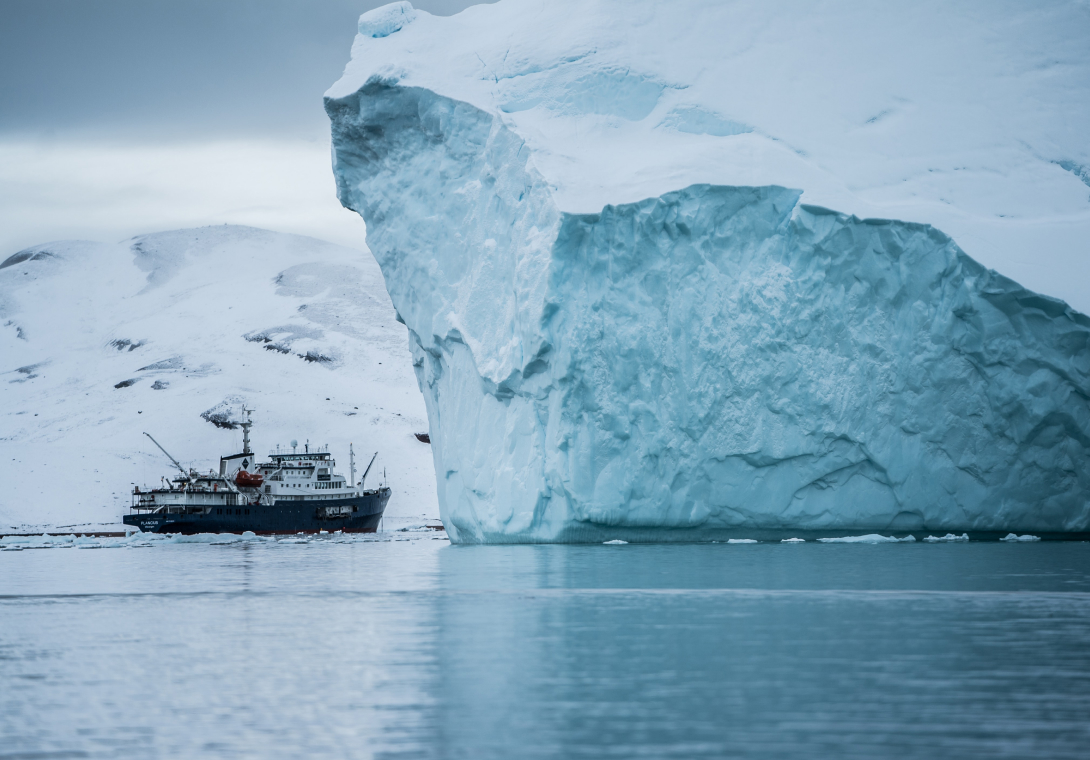
The most beautiful thing in the North is the ice — so white, much brighter than you can imagine. The water is crystal clear, and down there, the ice blocks are cast in turquoise. The other thing you immediately notice when you first get there is the complete absence of trees or even bushes. On the islands, on the mainland, here and there, you can notice a patch of grass, but that’s about it. However, we observe many animals: walruses, seals, polar foxes. They are very friendly, not afraid of people at all. Once I saw polar bears. They also show keen interest, but we were scared of them ourselves. If a bear has been seen somewhere on the shore, no one will set a foot around there.
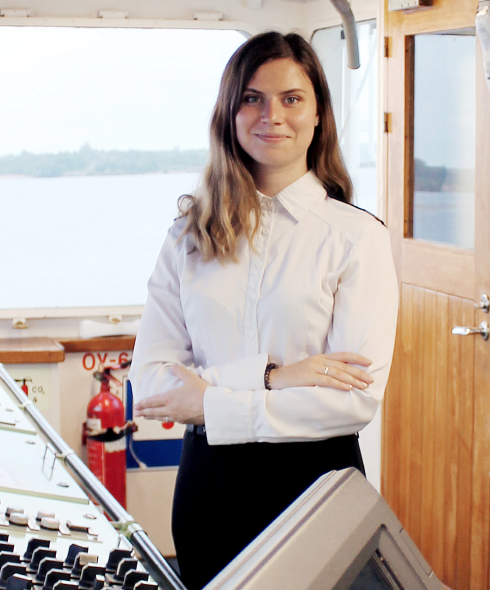
My department takes part in the entire life cycle of the icebreaker. We are engaged in developing reactor plants, which are the engines and energy sources for the nuclear icebreaker vessels. At certain stages, we participate in the shipbuilding process (we have a representative office at the Baltic Shipyard) and tests. Then, we monitor the operating vessels. We remotely help sort out any questions about the operation or breakdowns, from which no one is insured. We are also involved in the maintenance of the related units and extending the icebreaker’s life cycle. That is, we trace the entire life of the ship from birth to its latest stages.
The icebreaker is notable for the fact that in many ways corresponds to the most childish and naive self-image: this is a big machine that goes through the ice, cracks it open, and then other ships follow the formed path. The nuclear-powered ships also carry out emergency rescue operations, deliver supplies, food, people to remote areas. Actually, that’s all. Although, for example, the ship «50 Years of Victory» is still used to transport tourists to the North Pole and back. The journey takes an average of 14 days. The purpose of such a journey, and hence the function of the ship, is the tourist entertainment and, frankly speaking, pure joy. In a sense, the icebreaker — this huge, incredibly complex colossus with a nuclear reactor onboard is our direct link with childhood. You grow up and understand: at least something in the adult world turned out to be exactly what you once imagined it to be.
Back in the Soviet times, the development of the Arctic and the Northern Sea Route was considered the task of paramount importance, which was necessary for the Soviet economy’s success. In the 1930s, the infamous expedition on the Chelyuskin steamer took place. Without icebreaker assistance, it drifted away from the coast of Chukotka and was crushed by ice. The passengers were rescued by helicopters from a drifting ice floe. This story revealed the necessity of safe navigation along the Northern Sea Route. The lessons were learned. Today, Rosatom provides safe navigation using the world’s only nuclear-powered icebreaker fleet. It consists of four ships: two nuclear-powered icebreakers, each carrying a two-reactor nuclear power plant («Yamal» and «50th Jubilee of Victory»), and two icebreakers each equipped with a one-reactor engine («Taimyr» and «Vaygach»). The fleet will soon be strengthened with three more multi-purpose nuclear-powered icebreakers as part of the 22220 project. They will break through ice up to 3 meters thick, creating passages for large-tonnage vessels navigating in the Arctic. The fleet’s mission is providing year-round support for ships along the Northern Sea Route. This significantly shortens the route for cargo traveling from Europe to Asia and improves the lives of Russia’s remote regions with access to the Northern and Eastern seas. This year, the Far Eastern shipbuilding facility «Star» will begin constructing the first super-powerful icebreaker «Leader» ordered by Rosatom. It will break the now impassable ice providing year-round pilotage.
There will be three vessels of such class in total.