Watch the videos to learn more about each section and read stories from the heroes who share their first hand experiences. The guide to the world of atoms is played by Roman Evdokimov.

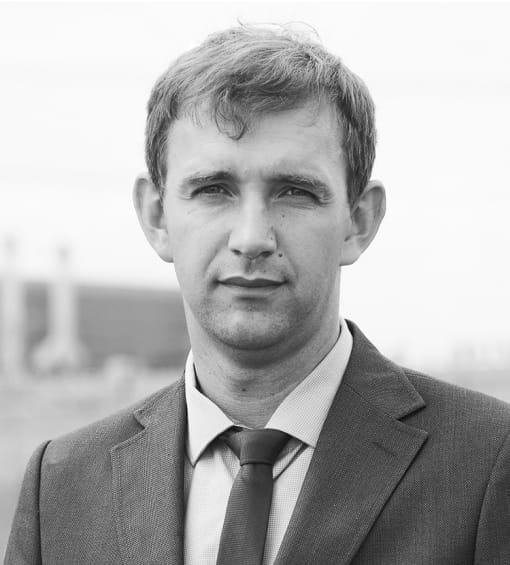
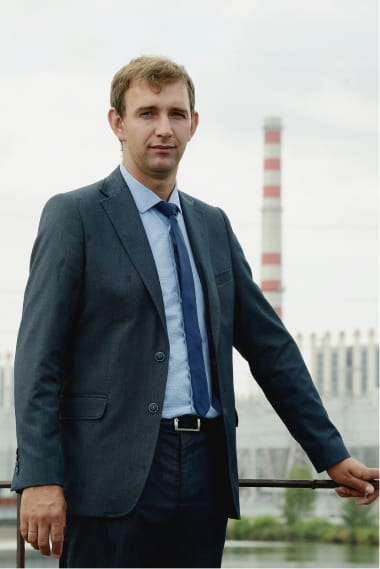
I was around three or four years old when my father began to take me with him to the cooling pond at the Kursk NPP. He then worked as a gamekeeper, we traveled on a motorboat on this reservoir, scared the poachers away (there used to be a fish farm) and all that stuff. That is, since childhood, I was in love with all this, and I never questioned the choice of future profession. After school, I entered the ichthyology course at the Dmitrov Fisheries Technological Institute. My internship took place at a sturgeon farm. After graduation, I was advised to go to the postgraduate program. I had earned a good reputation, regularly took part in various activities, had a scholarship. Still, I wanted to go home.
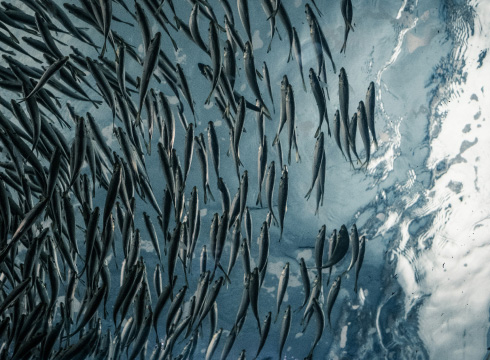
So in 2012, I began my work in the reservoir. Three years later, I already worked in engineering positions, and by the end of 2018, I was appointed the Head of the Site. Our main direction is maintaining the quality of industrial water. «Industrial» does not mean that it’s unfit for life. The term itself refers to the reservoir’s formal function: cooling the external circuit of the equipment. And so these waters teem with fish and other forms of life. Once, before my arrival, the black carp was bred here to fight the zebra mussel. The mollusks by themselves do not pose any danger, but they tend to settle inside pipelines and actively develop there, thereby deteriorating the culverts. We have silver carps acting as sperm whales: they filter water, passing it through themselves in incredible volume, and thus they prevent flowering.
When leaving the nuclear power plant, the water becomes warm so that you can swim in it from March to October. There are sandy beaches on the territory of the city, people from all over the region come. We are continually working on improving water quality. Hopefully, over time it will become as clean as in the Baikal. Okay, maybe I’m exaggerating a little, but this is what we strive for.
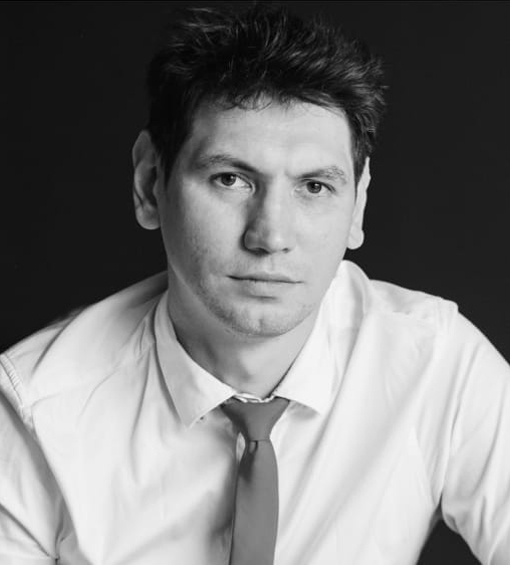
One can say that I went to find science, but ended up in Rosatom. I’d always wanted to be a physicist. At some point, I moved from the field of theoretical to experimental science. Generally speaking, now I’m engaged in the creation and implementation of new technologies. In the last three years, it has been mostly robotization. We are moving forward. Not in giant leaps, of course, but steadily.
With a team of android technology from Magnitogorsk — probably the only Russian robotics enthusiasts who think on an industrial scale — we adapt solutions for the use of anthropomorphic robots in radioactive environments. Imagine a colossus with bionic arms suspended from various manipulators, controlled by the human operator —— through cables and from any distance. They may be sitting in a dry, safe place, while the robot is doing all the dirty work.
I’m not only interested but fascinated by the idea of android technologies. My stand is straightforward: a real person should not work in harmful conditions, even if it is well paid. I’m not speaking from the standpoint of conventional humanism right now. The point is that this situation itself is merely unhealthy and wrong.
When we say «anthropomorphic robot,» of course, we do not mean that we treat it as a person, but there are also funny situations. For example, the first robot we created was called Alyosha. The second one was named Sophia. It doesn’t make any sense; we didn’t intend on naming them at all. It’s just that one of our employees began to address the robot as «Alyoshenka.» So we decided that the second should be named Sophia — like that couple from the soviet film «Gardes-Marines,» remember?
Today, the world’s most widespread energy resource is fossil fuels. Still, the use of those is harmful to the environment. When burned, fossil fuels emit carbon dioxide and other dangerous combustion products — the concentration of carbon dioxide in the Earth’s atmosphere today is the highest for the past 800 thousand years.
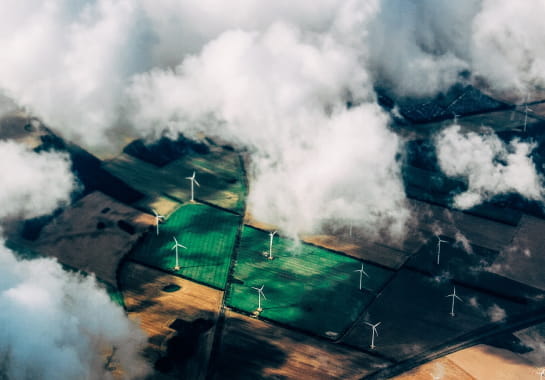

Global warming and cooling, the sea level increase, and environmental disasters are just some of the fossil fuel use consequences. Nowadays, the international community is concerned with environmental issues like never before. Nuclear power plants, solar, wind, and hydropower plants exercise the concept of «green» energy: production of such energy has almost zero emissions. Moreover, uranium fission releases much more heat than the combustion of fuel; operating a thermal power plant requires a daily fuel supply worth of several cargo trains. In contrast, a nuclear power plant requires only a few cars of supplies per year. Rosatom prioritizes the balance of wind and solar energy, nuclear and hydropower; all of these fields use technologies with zero emissions. Since electricity consumption varies during daytime and seasons, the nuclear power plants and hydroelectric power plants provide the baseload within the «green square.» Simultaneously, solar and wind energy sources operate in the accumulation mode and cover peak loads.