Watch the videos to learn more about each section and read stories from the heroes who share their first hand experiences. The guide to the world of atoms is played by Roman Evdokimov.
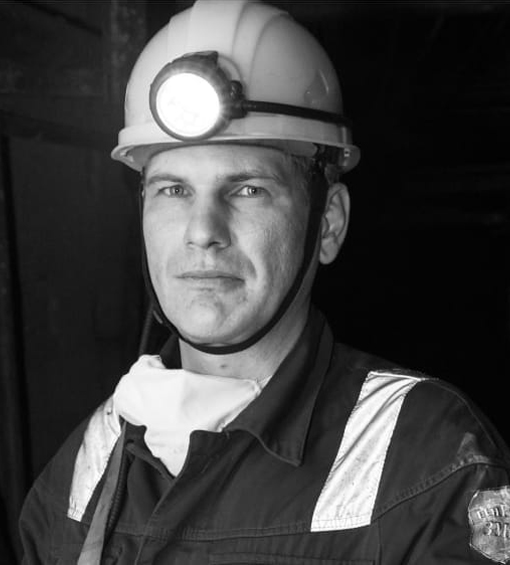
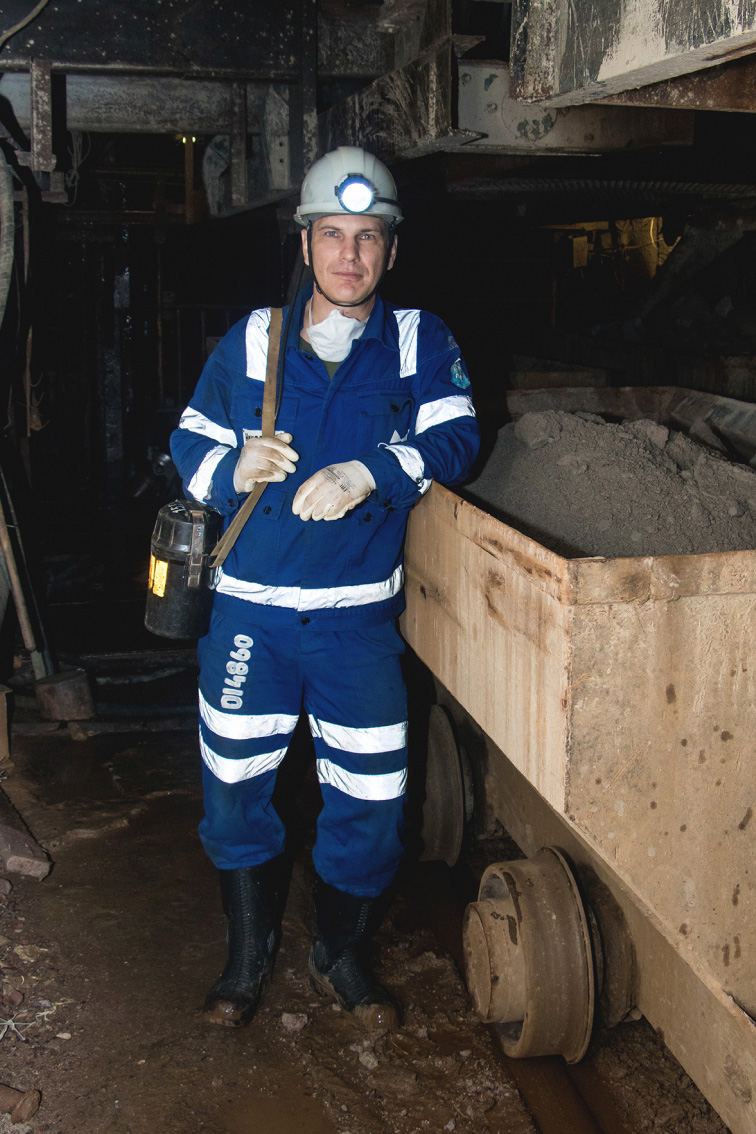
There is a seemingly hackneyed phrase: «The land is rich in its subsoil.» So when you walk through an underground mine, you truly understand the meaning of these words. You start seeing it all around you. You observe all these layers, notice something gleaming in the light of your lantern. When it shines, you understand that darkness is not darkness, not gloom, not blackness. There are so many things hidden. The underground is dangerous, and at the same time, when you are here, alone with your thoughts, you start to reconsider yourself, your life. Perhaps it’s because of the enclosed space, depth, and isolation from the world, but here many thoughts come to mind.
The Mine No 1, where I work, produces uranium. It is used both in military defense and in power supply, directly in nuclear power plants’ operation. At the site, we are engaged in the delivery of ore to the mine shaft and to the surface, as well as the transportation of people and the lowering of timber, which is used primarily for fastening, and protection from landslides.
My choice of profession was predestined. My father is a cavalier of the Order of Miner’s Glory. He and my mother are both veterans of the nuclear industry. My siblings, cousins, aunts, and distant relatives are in one way or another connected with work at the mine. It’s our family tradition. We are a dynasty. I have been working here for over 20 years. I started in 1998 as a locksmith of mining equipment, then I was a mining foreman, and since 2010 I’ve been the Head of intra-mine transport. I like my job, my enterprise, and our city, Krasnokamensk. It’s small and cozy and beautiful. Maybe this is not noticeable at first glance, but it is worth taking a closer look. I would not change it for anything.
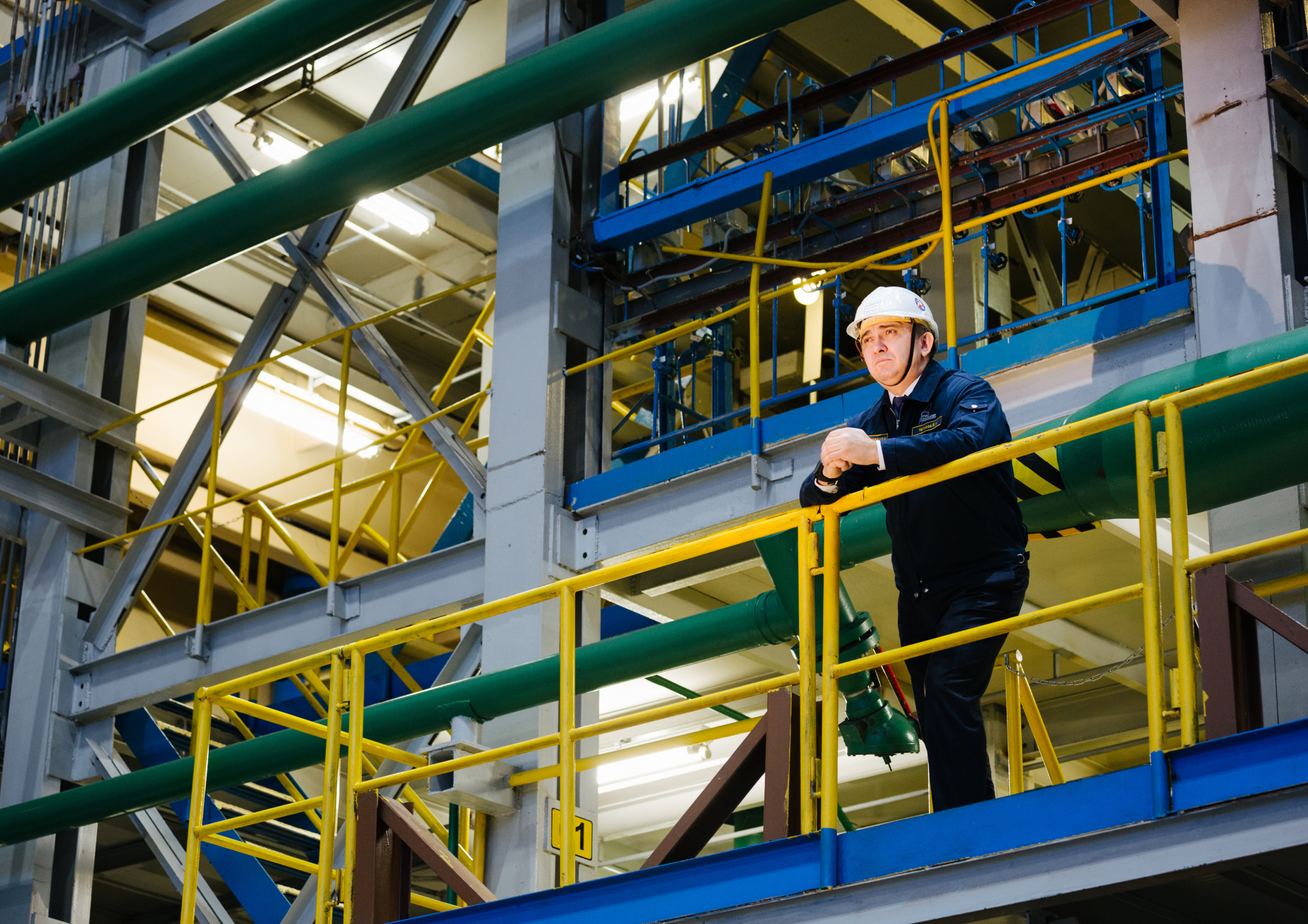
I was born and raised in a nuclear city, then called Semipalatinsk-21. Now it’s named Kurchatov, after the famous Soviet academician, and is located in present-day Kazakhstan. The nuclear test site that used to be there is long gone. My father worked at the landfill, my mother, although to a lesser extent, was also connected with that. Also, we had many relatives living around there. Therefore, throughout my childhood, I had nuclear engineers as role models — smart, purposeful people doing a good thing for the country. Exact sciences were good at school. After graduation, I entered the Tomsk Polytechnic Institute, where I received the specialty of engineer-physicist.
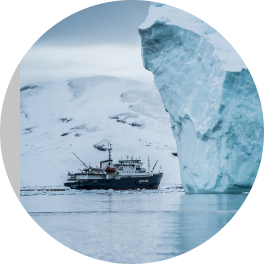
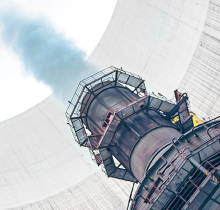
The Kola nuclear power plant is the northernmost in Europe. It is the first Russian nuclear power plant built beyond the Arctic Circle. Of course, the weather is worse than in the midlands, unfavorable weather conditions happen more often, but their influence is minimal. It’s all because we prepare for winter very carefully.
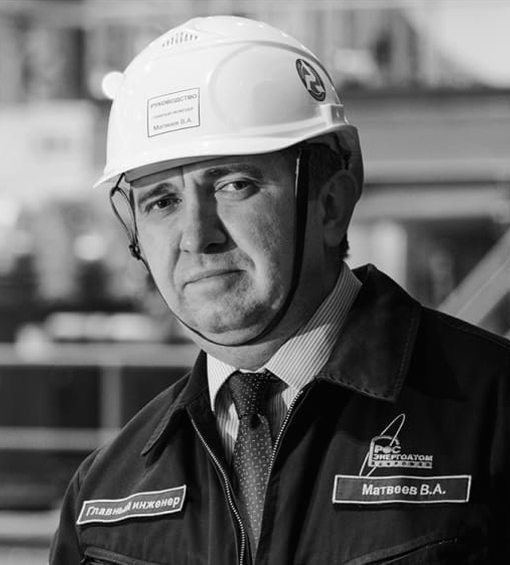
These days we’ve got over 2000 people working here. Safety is our priority — both for the employees and safety in the broader sense of the word. Like any industrial enterprise, a nuclear power plant is a potential hazard. But the modern level of technology and strict requirements for the operating conditions of nuclear power plants make it possible to reduce all possible risks to a minimum. Besides, the experience gained after the events at Chernobyl and Fukushima significantly changed the approaches to ensuring the safety of nuclear power plants. The impact of our enterprise on nature meets even the strictest of standards. And these are not just words. It is confirmed by the official data that is in the public domain. When it comes to nuclear waste, our strategy is quite simple: we have to return as many radioactive components into the soil as we have taken from it. In addition, the Kola NPP has a unique complex for the processing of liquid radioactive waste, and we are reducing its amount every year. In 10-15 years, we will finally get away from their accumulation.
Rosatom’s activities and geography are extensive, from the disposal of the Soviet era’s radioactive legacy in Sayda-Guba of Murmansk region to training of Bengalee specialists who will become the employees and staff of the Rooppur Nuclear Power Plant in Bangladesh.
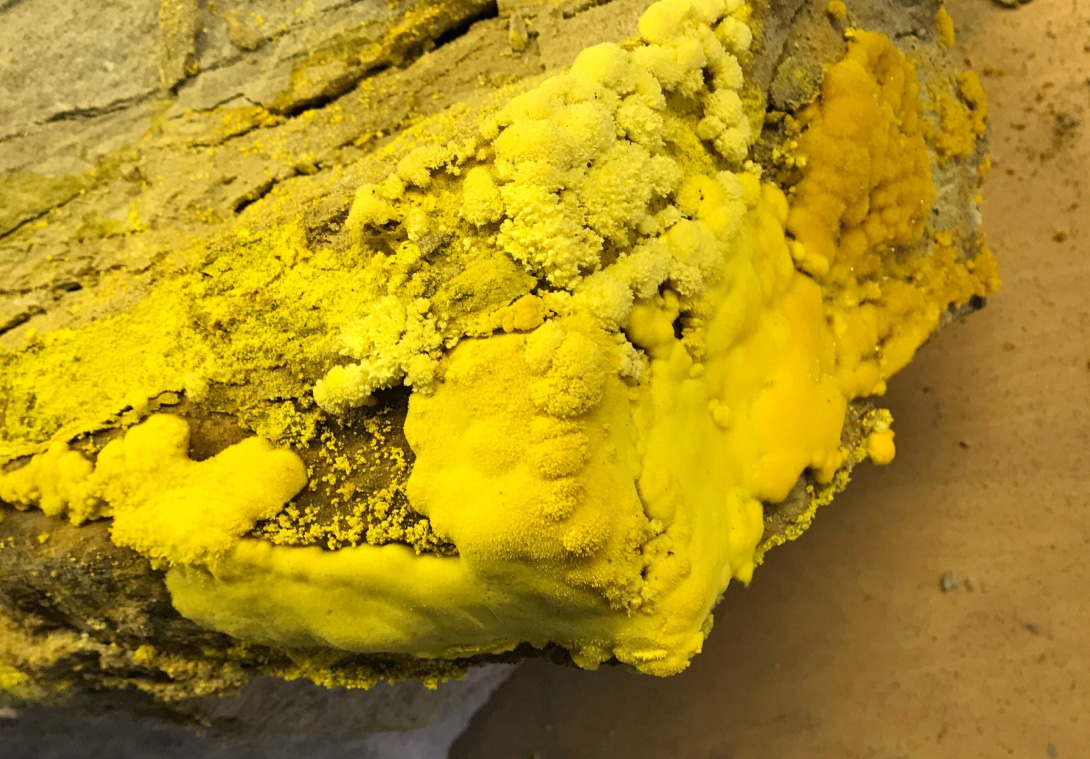
Rosatom has around 350 facilities with workplaces for over 250,000 people. For instance, uranium is mined in Krasnokamensk, 60 kilometers from the Russian-Chinese border; then, the ore is enriched in Siberian and Ural factories’ centrifuges. Rosatom is one of the world leaders in the nuclear industry. It ranks second in the world in terms of uranium stocks, fifth in production output, and fourth in atomic energy production volume.